Emirates Shipping Association
The Strait of Hormuz Blockade and The Impact on the Global Economy


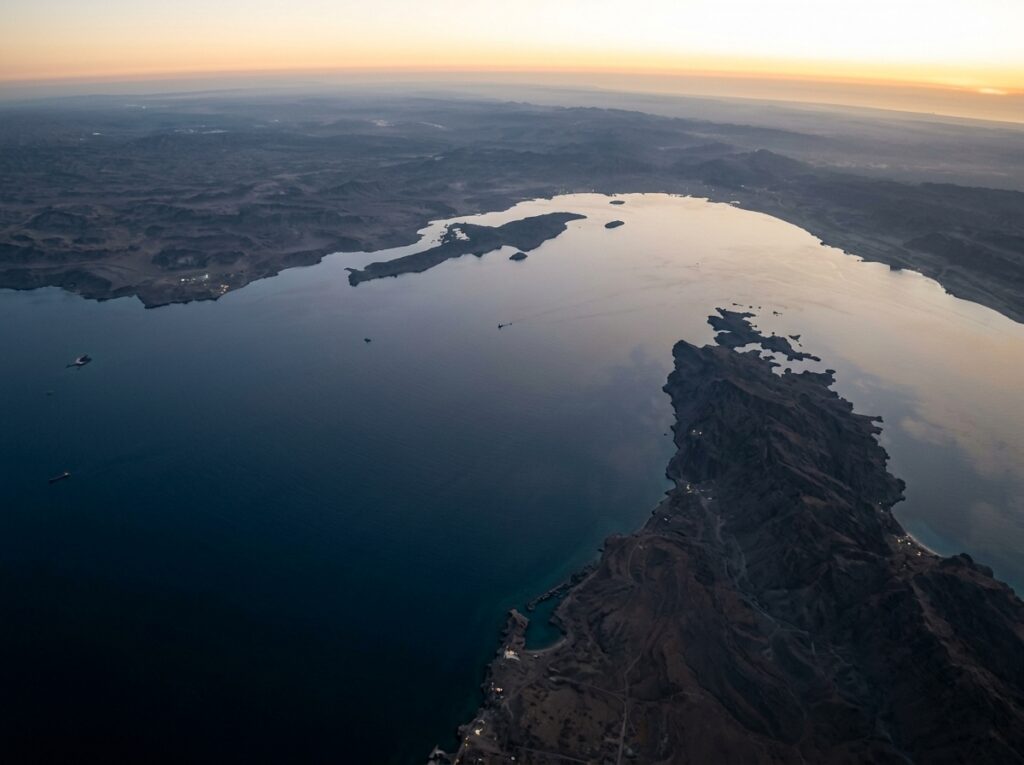
This 33 kilometre passage between the Arabian Gulf and the Gulf of Oman is one of the world’s most critical shipping lanes. Through it flows 20 per cent of global oil consumption, 20 per cent of the world’s liquefied natural gas trade, 30 per cent of internationally traded fertilisers, and 45 per cent of global sulphur exports.
Before 28 February 2026, an average of 138 commercial vessels transited the Strait every day. Since the conflict began, vessel traffic through the Strait has fallen significantly, with commercial movements remaining well below normal levels. Freight costs have spiked to historic levels, with benchmark tanker rates reaching record highs and air freight surcharges increasing sharply across multiple trade routes. The International Energy Agency has described this as one of the most significant energy supply shocks in modern history, larger than the 1973 and 1979 oil crises combined.
Emirates Shipping Association has issued multiple member advisories covering the operational detail for the maritime community. This article focuses on the wider picture: what happens when a single chokepoint goes dark, and what it reveals about the hidden dependencies that connect a shipping lane in the Gulf to a diesel pump in Germany, a fertiliser shipment in Brazil, a restaurant in India, and a grain harvest in sub-Saharan Africa.
As the situation continues to evolve, this article reflects publicly available information and market analysis as of 18 May 2026.
Oil Is in Everything
When people hear “oil crisis,” they think of petrol prices. The reality is far broader.
6,000+ everyday products
contain petroleum-derived ingredients, from toothpaste to heart valves
A standard barrel of crude oil yields approximately 45 gallons of refined products. Of that, 43 per cent becomes petrol, 22 per cent becomes diesel, 9 per cent becomes jet fuel, and 18 per cent becomes petrochemical feedstocks — the chemical building blocks for plastics, synthetic textiles, pharmaceuticals, fertilisers, and thousands of consumer goods. It is this 18 per cent that explains why an oil disruption reaches far beyond the fuel pump.
Oil in Plastics
Polyethylene, polypropylene, PVC, polystyrene are all synthesised from petrochemical feedstocks. That means every food container, water bottle, medical device casing, and electronic housing carries embedded petroleum. Pharmaceuticals rely on petrochemical precursors: aspirin, antihistamines, cortisone, and the gel capsules that hold vitamins are all manufactured using oil-derived compounds. The list extends into virtually every corner of daily life: medical devices, synthetic textiles, cosmetics, detergents, construction materials, even the wax coating on supermarket produce. Oil is what the economy is made of.
The Disruption Clock
Every major economy maintains strategic petroleum reserves, and in the early days of the crisis, several governments pointed to alternative suppliers and emergency stockpiles as evidence that the disruption was manageable. Reserves are a time buffer, not immunity. They buy months, not years, and the clock started on 28 February.
12 million barrels per day of oil supply lost
— more than the 1973 and 1979 oil crises combined (IEA)
Asia is the most exposed region with 84 per cent of crude oil transiting the Strait is destined for countries in Asia. China imports approximately 5 million barrels per day through Hormuz — around 45 per cent of its total oil imports — and holds strategic petroleum reserves estimated at 1.1 to 1.3 billion barrels, intended to provide roughly 100 days of cover.
Analysts estimate that prolonged disruption could place increasing pressure on refining systems, petrochemicals, aviation, and industrial supply chains as reserves decline and supply gaps widen.
China produces about 27 per cent of its oil domestically, which provides some cushion, but its petrochemicals, aviation, and heavy transport sectors remain acutely vulnerable. South Korea’s liquefied natural gas reserves are reported to last only nine days. Japan, despite holding the highest reserve cover among industrialised nations at approximately 230 days, sources 70 per cent of its Middle Eastern crude via the Strait and has already begun releasing stockpiles.
India maintains only around 10 days of strategic reserve cover, leaving it among the most exposed major economies. India imports roughly two-thirds of its liquefied petroleum gas from the Middle East, with 90 per cent of those shipments transiting the Strait. With supplies disrupted, the government directed refineries to prioritise households over commercial users, forcing thousands of restaurants across the country to shut down or strip signature dishes from their menus. In parts of Mumbai and Delhi, residents queued from 3 a.m. to secure a cooking gas cylinder.
Europe mandates 90 days of emergency oil reserves across EU member states, with total stockpiles estimated at around 100 million tonnes. In reality, the EU Commission has acknowledged that approximately 40 per cent of its imported jet fuel and diesel historically transited through this corridor.
The IEA coordinated a record release of 400 million barrels from member countries’ strategic reserves — but analysts noted this equates to roughly four days of global consumption, or 16 days of typical Hormuz volumes.
Germany, France, Spain, and the UK have all begun drawing on national stockpiles. European diesel prices surged 35 per cent within weeks. Europe’s energy-intensive industries such as steel, chemicals, and cement were already under margin pressure.
North America is relatively better positioned but not insulated. The US Strategic Petroleum Reserve held 415 million barrels before the crisis, with a maximum drawdown capacity of 4.4 million barrels per day. US petrol prices have risen by more than a dollar per gallon since the war began. Jet fuel costs are up 95 per cent. The US produces about three-quarters of its fertiliser domestically, but global price transmission means American farmers are still paying more for inputs, and the cost of every diesel-dependent step in the agricultural value chain is climbing.
On 11 March, the 32 member countries of the International Energy Agency agreed to release 400 million barrels from their combined emergency reserves. But analysts were blunt: the release equates to roughly four days of global consumption, or 16 days of typical Hormuz volumes.
The Importance of Diesel
The most consequential product refined from crude oil may be the least visible: diesel. Diesel powers the global logistics chain. It runs the trucks that deliver food to supermarkets, the tractors that plough fields, the generators that supply electricity in developing economies, and the heating systems that warm homes across northern Europe. When diesel prices rise, the cost of moving everything rises: food, medicine, building materials, consumer goods. The last mile is a diesel mile. European road freight operators saw fuel costs rise faster than contracts could adjust, with diesel surcharges jumping 35 per cent in weeks while the average freight contract reprices quarterly.
European diesel prices broke €2 per litre in Germany within days of the Strait’s closure. In the United States, diesel reached $5.38 per gallon. Jet fuel costs have nearly doubled in some markets, prompting airlines to implement emergency surcharges and raising concerns about systemic fuel shortages at European airports within weeks if stable deliveries are not restored.
From Fertiliser to Food
The connection between the Strait of Hormuz and global food prices runs through a single commodity most people never think about: nitrogen fertiliser.
Granular Urea prices surged to $700
from $400–490 per metric tonne, a 50% increase in weeks
The Arabian Gulf is one of the world’s largest producers of nitrogen-based fertilisers, which depend on natural gas as their primary feedstock. The region accounts for 30 to 35 per cent of global urea exports and 20 to 30 per cent of ammonia exports. Overall, up to 30 per cent of internationally traded fertilisers normally transit the Strait of Hormuz. The disruption has severed this supply chain at multiple points simultaneously: Gulf producers cannot export, and fertiliser manufacturers elsewhere face soaring natural gas costs that make production more expensive.
The price response has been swift. Granular urea, a bellwether for nitrogen fertilisers, jumped from $400–490 per metric tonne before the war to approximately $700 — an increase that has cascaded through agricultural input markets worldwide. The Food and Agriculture Organization of the United Nations has warned that global fertiliser prices could average 15 to 20 per cent higher in the first half of 2026 if the crisis persists. The World Food Programme estimates that if the conflict continues and oil prices remain above $100 per barrel through mid-year, an additional 45 million people could fall into acute food insecurity — on top of the 318 million already facing crisis-level hunger across 68 countries.
Unlike oil, no country maintains strategic fertiliser reserves.
There is no ammonia equivalent of the Strategic Petroleum Reserve. And when a captain risks the Strait, they carry oil, not fertiliser. The economics of a dangerous transit favour higher-value cargo.
The agricultural impact operates on a delayed fuse. Nitrogen fertilisers account for roughly 60 per cent of global fertiliser use and approximately 20 per cent of grain production costs. Reduced availability and higher prices lead to lower application rates, which reduce yields on staple crops — wheat, rice, maize. Farmers shift acreage toward less input-intensive crops.
The FAO has warned that if the disruption persists beyond three months, it will affect global planting decisions for 2026 and beyond.
Fertiliser follows a nonlinear yield response: even modest reductions in application can produce disproportionately large declines in output, particularly in regions where baseline usage is already low.
The countries most exposed are those that can least afford it. African grain-importing nations, South Asian economies dependent on both imported fertiliser and imported natural gas to produce it domestically, and developing countries already managing high debt burdens and constrained fiscal space face compounding pressures from elevated freight costs, energy prices, and food input costs simultaneously.
The grain price response so far has been more muted than the energy response — wheat, corn, and soybeans are up 2 to 7.5 per cent compared to energy’s 20 to 50 per cent surge. But the fertiliser-driven yield impact remains a delayed-fuse risk, and the broader effects on global food systems may take longer to fully emerge.
The Full Impact Has Not Yet Arrived
The global economy is still processing cargo that was loaded before the war began. Tankers are slow-moving vessels. The last shipments of oil dispatched before 28 February are only now reaching ports in Europe and North America, and analysts note that most pre-closure supplies in transit to the United States were largely exhausted by mid-April. The supply picture visible today still reflects a world where the Strait was open. That buffer is now gone.
“In March, cargo ships carrying oil that transited the Strait before the war were still arriving. In April, there [was] nothing.”
— IEA Executive Director Fatih Birol
As that pre-war pipeline of cargo depletes, the true supply gap becomes apparent. China faces its June threshold, the point at which reserves transition from comfortable buffer to binding constraint. The EU aviation authority has warned of systemic jet fuel shortages within weeks if stable deliveries do not resume. The Philippines, which imports virtually all its crude from the Middle East, has already seen petrol prices surge 76 per cent. And the 12 April US naval blockade introduced a new variable: traffic that had tentatively resumed during the ceasefire window was immediately frozen again.
Equally important is what recovery looks like when it eventually comes. The disruption will not end the day the Strait reopens. More than 1,550 commercial vessels, of which 400 are oil tankers, remain stranded in and around the Strait. Production that was shut in across Iraq, Kuwait, Saudi Arabia, and the UAE takes time to restart. Insurance markets need to reinstate war risk cover — and underwriters will demand evidence of sustained stability before doing so.
Berthing schedules at Gulf ports will face pressure from a sudden influx of vessels competing for pilotage, terminal capacity, and bunkering services. Analysts and logistics operators have warned that clearing the backlog alone could take weeks to months. Recovery is often slower than the initial disruption. The 2021 Suez Canal blockage lasted six days but took months to unwind in schedule terms.
The scale of the current disruption is significantly larger — and the recovery process will likely be correspondingly longer.
Resilience in This Region
While the disruption has tested every node of the global maritime system, the operational picture across the UAE’s port infrastructure tells a different story.
AED 135 billion
annual contribution of the UAE maritime sector to the national economy
UAE ports remain operational under enhanced security protocols. The Ministry of Energy and Infrastructure implemented customs facilitation measures that allow cargo destined for Jebel Ali or Abu Dhabi Ports to be cleared through the Ports of Fujairah and Khor Fakkan, with direct road transport streamlining logistics during the disruption. DP World has confirmed that all four terminals at Jebel Ali continue to operate normally with enhanced safety measures in place. AD Ports Group has confirmed that commercial port operations under its management remain open. Bunkering operations continue from barges in Fujairah using existing inventories.
This operational continuity reflects decades of investment in port infrastructure, regulatory capability, and crisis preparedness — the kind of strategic depth that distinguishes a mature maritime economy from one that is merely a transit point.
The disruption is also accelerating conversations around maritime resilience, diversified trade corridors, strategic energy planning, and supply chain visibility. Governments, ports, shipowners, and logistics operators are increasingly recognising the importance of long-term investment in maritime infrastructure and crisis preparedness.
The wider lesson is structural. Over 80 per cent of global trade moves by sea. The current crisis has demonstrated, with uncomfortable clarity, how deeply the global economy depends on a small number of maritime chokepoints — and how profoundly a disruption at any one of them can cascade through energy markets, food systems, and industrial supply chains worldwide.
Nations that invest in maritime infrastructure, diversified trade corridors, and institutional frameworks for crisis response are better positioned to absorb these shocks. Those that treat shipping as an invisible utility, rather than as strategic infrastructure, will continue to be caught unprepared.
Emirates Shipping Association exists to provide a unified voice for maritime stakeholders, authorities, and decision-makers across the region. The Association does not set policy. But it convenes expertise, facilitates dialogue, and helps build the collaborations necessary to sustain a resilient maritime ecosystem — one that endures through crises and emerges stronger from them.
This disruption will pass. The Strait of Hormuz will reopen. Vessels will move again. But the structural dependencies it has exposed — from diesel to fertiliser to the food on the world’s tables — will demand attention long after the headlines fade. Over 80 per cent of global trade moves by sea, yet shipping remains one of the least visible industries on earth. This crisis is making the invisible visible, reminding the world that when a 33-kilometre strait closes, everything is affected, because everything we consume was carried by a vessel, crewed by seafarers, and routed through waters most people don’t usually think about.
Press Enquiries
For media enquiries, interview requests or further information on this topic, the Association's communications team is available to assist.