Emirates Shipping Association
Introducing Beyond the Strait


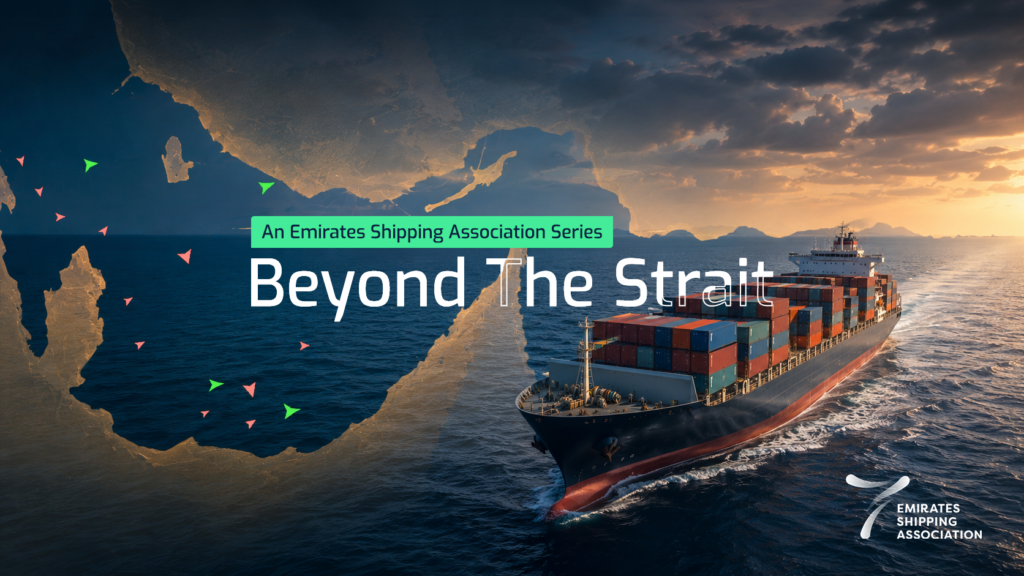
A new thought leadership series from Emirates Shipping Association
The Strait of Hormuz disruption tested the maritime industry on every dimension at once.
For four months, one of the world’s busiest shipping lanes operated under conditions that few in the sector had encountered before. Vessel transits fell sharply. War risk cover was withdrawn. Freight markets recorded historic spikes. Container lines rerouted via the Cape of Good Hope. And across the UAE, an unprecedented operational picture played out across ports, shipowners, marine service providers, and the wider maritime ecosystem.
The recent reopening of the Strait, following the signing of a peace agreement between the United States, Israel, and Iran, marks the beginning of a recovery phase. But recovery is rarely as quick as disruption. Vessels are still waiting to transit. Insurance frameworks are being reassessed. Crews are returning home after months in heightened-risk conditions. The structural lessons across the maritime system will continue to unfold long after the immediate crisis fades.
Beyond the Strait brings together the people, expertise, and ideas shaping the industry’s path forward.
The series is built from an industry-wide assessment by Emirates Shipping Association looking at the impact of the disruption and what recovery requires. Through conversations with industry leaders and frontline experts, the series explores the recent Arabian Gulf disruption across five themes:
Human Factors — the impact on seafarers, shore-based personnel, and the families ashore
Legal — the contractual, regulatory, and dispute considerations surfacing through the disruption
Insurance — war risk cover, P&I arrangements, and the recalibration of maritime risk
Operational — port continuity, supply chain resilience, and crisis response
Commercial — freight markets, contract performance, and the wider economic dimension
Each theme will produce a series of thought leadership articles, interview features, and industry insights aimed at supporting preparedness, resilience, and recovery planning across the maritime sector.
Follow Emirates Shipping Association on LinkedIn or join the member mailing list to be notified as each new piece publishes.
The Human Factor
Beyond the Strait opens with the theme that maritime resilience ultimately depends on: the people who keep the industry moving.
The first piece in the series is a conversation with Chirag Bahri, International Operations Manager at the International Seafarers’ Welfare and Assistance Network (ISWAN) — a global charity dedicated to the welfare of seafarers worldwide. A former seafarer himself, Chirag shares what ISWAN’s SeafarerHelp helpline has heard over the past four months, what reopening looks like for crews who have lived through extended high-risk conditions, and why the most important work begins after a crisis ends.
Further conversations under the Human Factor theme will follow in the coming weeks. These include a feature with Nafsi Health — the UAE’s first licensed digital mental health platform, serving over 10,000 users and more than 30 corporate partners across the Middle East — on the mental health of the maritime workforce and why it should be treated as a core part of how the industry operates.
Together, these voices offer a clear picture of what the recent disruption has meant for the people who keep maritime moving — and what the industry should do next.
The Strait of Hormuz will continue to function as one of the world’s most critical shipping lanes. The lessons from these past four months will help define how the industry navigates the future.
Read the first piece in the series: The Human Factor — A View from the Helpline, a conversation with Chirag Bahri, ISWAN

Press Enquiries
For media enquiries, interview requests or further information on this topic, the Association's communications team is available to assist.